Commercial roofing plays a critical role in the long-term performance, safety, and value of multifamily properties.
For owners and operators, roofing decisions are not just maintenance items—they are capital decisions that directly
impact risk exposure, operating costs, and asset longevity.
At Vedomi Construction, we’ve managed roofing scopes across occupied, value-add multifamily communities where execution
timing, material selection, and coordination with ongoing operations matter just as much as cost.
Why Roofing Is a High-Stakes Capital Item for Multifamily Assets
Unlike single-family properties, multifamily roofing failures create cascading issues—interior water damage, mold risk,
tenant disruption, and insurance exposure. Deferred roofing issues often surface at the worst possible time, including
during refinancing, property sale, or lender inspections.
For this reason, proactive roofing assessments and well-planned replacement programs are essential to protecting both
short-term operations and long-term asset value.
Common Commercial Roofing Systems Used in Multifamily
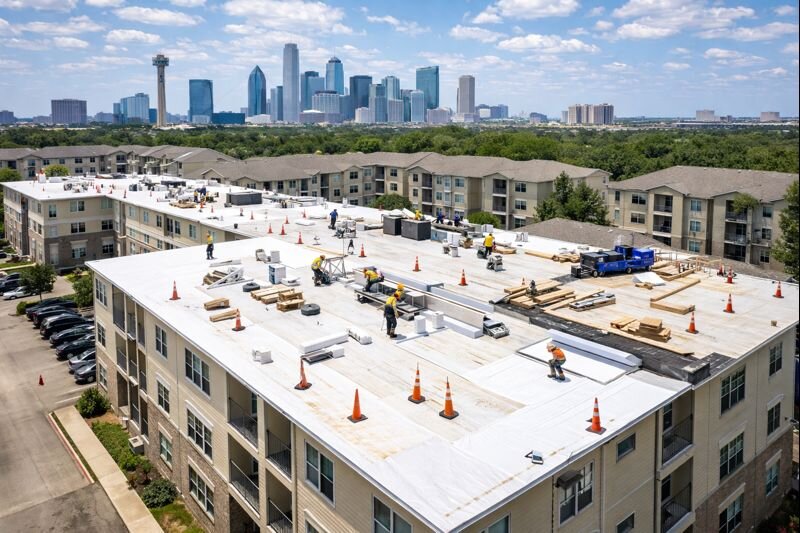
Most multifamily properties rely on flat or low-slope commercial roofing systems. Each system has different performance
characteristics, cost profiles, and ideal use cases.
- TPO (Thermoplastic Polyolefin): Popular for its durability, reflectivity, and cost efficiency
- Modified Bitumen: Proven performance with layered redundancy
- EPDM: Rubber membrane systems with long service life when properly maintained
- Metal Roofing: Used selectively for durability and architectural considerations
Selecting the right system depends on roof geometry, climate exposure, budget constraints, and long-term ownership
strategy.
Timing Roofing Work in Occupied Multifamily Communities
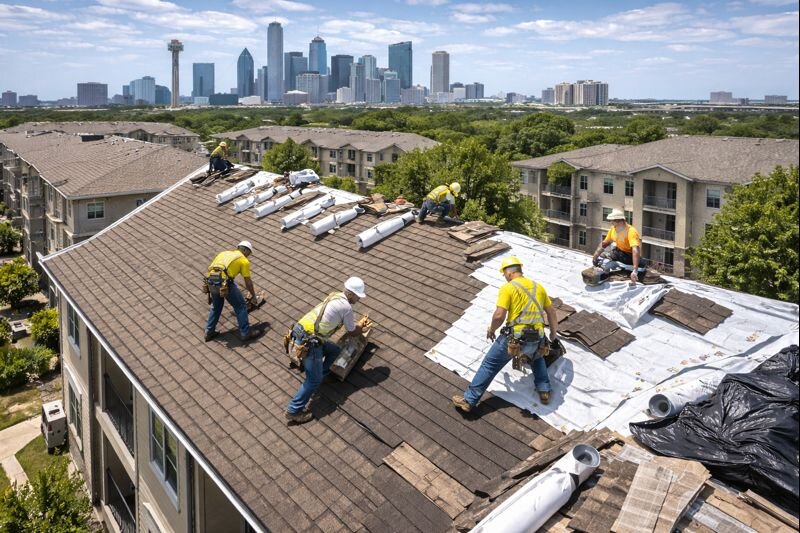
Roof replacements on occupied properties require careful sequencing to minimize resident disruption and protect
interior units. This includes:
- Phased roof section replacements
- Temporary weather protection planning
- Coordination with leasing and maintenance teams
- Clear resident communication protocols
Well-executed roofing projects can be completed without interrupting leasing velocity or day-to-day operations when
planned correctly.
Roofing and Insurance, Lenders, and Risk Reduction
Commercial roofing condition directly affects insurance premiums, lender requirements, and inspection outcomes.
Properties with aging or poorly maintained roofs are more likely to face:
- Higher insurance deductibles
- Coverage exclusions
- Lender holdbacks or repair escrows
- Delayed closings or refinancing challenges
A documented roofing upgrade program helps reduce risk, improve insurability, and support smoother transactions.
Planning Roofing as Part of a Broader CapEx Strategy
Rather than treating roofing as a standalone repair, successful owners integrate roofing into broader CapEx planning.
This often means aligning roofing work with:
- Exterior paint or façade upgrades
- Drainage and gutter improvements
- Electrical or fire safety upgrades
- Interior renovation timelines
Bundling scopes strategically can reduce mobilization costs and improve execution efficiency.
Choosing the Right Commercial Roofing Partner
Multifamily roofing requires more than material installation—it requires operational awareness, communication, and
accountability. Owners should prioritize contractors with proven experience in occupied multifamily environments and
the ability to manage large-scale scopes safely and predictably.
At Vedomi Construction, we approach roofing with the same discipline we bring to full renovation programs—focused on
risk reduction, durability, and long-term performance.
Planning a Roofing Project?
If you’re evaluating a commercial roofing project for a multifamily property in Dallas–Fort Worth or across Texas,
our team can help assess scope, timing, and execution strategy.
For multifamily owners planning roofing projects in North Texas, our team also provides full renovation and capital improvement services throughout Dallas–Fort Worth.